





When a wood deck starts showing its age, you have three paths forward. You can replace it entirely, restore it with cleaning and repairs, or refresh it with a new stain. In Pittsburgh and Western PA, where freeze-thaw cycles, humid summers, and heavy rainfall put extra stress on exterior wood, the difference between these three options matters more than it does in milder climates.
This guide walks through all three options so you can make an informed decision and know exactly when to call in a professional.
Deck Replacement
Deck replacement means tearing out the entire existing structure and rebuilding from the ground up. It's the most expensive and disruptive option, but sometimes the only one that makes sense.
Replacing a deck is significantly more expensive, ranging from $5,000 to $20,000 or more based on the deck's size, the materials chosen, and labor costs.
When to Consider Deck Replacement
- Extensive Rot or Structural Damage: If joists, beams, or the ledger board are rotted, no surface work fixes the underlying problem. Soft, spongy wood in the framing is the clearest sign.
- End of Lifespan: Wood decks typically last 10–15 years. Past that threshold with minimal maintenance; replacement is usually more economical than repeated repairs.
- Repair Costs Approach Replacement: If estimates are approaching 40–50% of replacement cost, rebuilding often makes more financial sense long-term.
- Code or Design Issues: Older decks may not meet current safety standards for railing height, spacing, or load capacity.
- Resale or Major Renovation: A new deck delivers the strongest curb appeal and ROI. If you're preparing to list your home, see our guide to the best paint colors to sell your home in Pittsburgh for more ways to maximize exterior appeal.
Deck Restoration
Deck restoration falls between a basic stain job and a full replacement. It involves cleaning, repairing or replacing damaged boards, and refinishing the surface. The right move when the structure is sound but the deck has been significantly neglected.
Pittsburgh's weather is particularly hard on neglected decks. Water that gets into checking or cracked wood freezes and expands over winter, accelerating deterioration year over year. A deck that might have lasted another few seasons in a drier climate often needs more urgent attention here.
When Restoration Makes Sense
- The framing (joists, beams, ledger board) is solid with no rot
- Some boards need replacing, but fewer than 25% of them
- The deck has been neglected for several years but still has useful life ahead
- The finish has completely failed with heavy weathering and deep surface cracking
- Cleaning: Removing built-up dirt, mildew, and old failing finish
- Repairs: Replacing rotted or damaged boards, tightening or replacing hardware, filling gaps
- Sanding: Smoothing weathered wood to prepare for proper finish adhesion
- Refinishing: Applying a fresh stain or sealer appropriate to the wood's condition
What Deck Restoration Involves
If you're unsure whether your framing is structurally sound, bring in a professional for a proper inspection before committing to a restoration. Restoring a wooden deck can cost anywhere from $2,000 to $8,000+, depending on the condition and the size of the deck.
Deck Staining
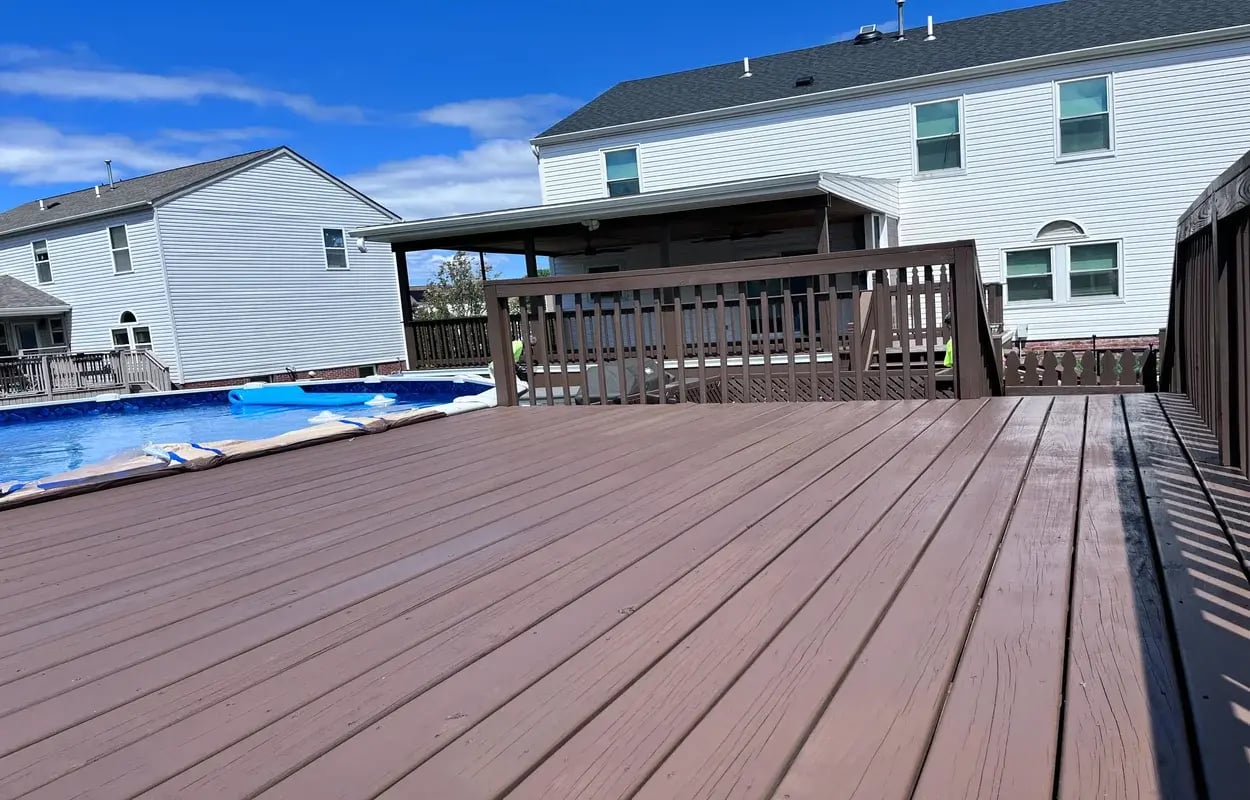
If the deck structure is in good shape and the finish is just fading, peeling, or going dull, staining is your answer. It's also the most cost-effective way to keep your deck looking sharp year over year. Done on a regular cycle, it prevents the neglect that leads to costly restoration or replacement down the road.
Choosing the right stain type also matters more than most homeowners realize.
Toner / Transparent Stain
A toner or transparent stain adds just a hint of color while letting the full wood grain show through. It penetrates the wood rather than sitting on top of it, which means it won't peel but it also won't hide imperfections.
Best for new or near-new wood in great condition where you want to showcase the natural grain. Not the right choice for older, weathered wood since there's not enough hiding power.
Semi-Transparent Stain
Semi-transparent stain adds more color while still allowing the wood grain to show through partially. It offers better UV protection than a toner and can even out minor discoloration.
Best for decks in good-to-moderate condition with some weathering. This is the sweet spot for most maintained decks. You get color, protection, and still see the wood's character.
Solid Color Stain
A solid color stain sits on the surface of the wood and fully hides the grain. It's closer to paint in appearance, with the most protection against UV and moisture.
Best for older decks with significant weathering, graying, or surface inconsistency where you want a clean, uniform look. Keep in mind, once you go solid, future maintenance also needs to be solid. Going back to a transparent stain requires full stripping. If you're weighing stain vs paint on other exterior wood surfaces, our post on painting over stained wood covers what to expect from each approach.
Professional deck staining typically runs anywhere from $1,400–$4,000+ depending on deck size and condition of the deck.
If you’re in the Greater Pittsburgh area, Learn more about our professional deck staining services.

Comparing the Costs: Replace vs Restore vs Stain
Use the table below to compare all three options at a glance.
| Options | Typical Cost | Best For |
| Staining | $1,400 - $4,000 | Well-maintained decks needing a refresh |
| Restoration | $2,000 - $8,000 | Sound structure, neglected surface |
| Replacement | $5,000 - $20,000 | Rotted framing, end of lifespan, code issues |
A good rule of thumb is that if repair costs approach 40–50% of the replacement cost, rebuilding often makes more financial sense in the long run. If the structural framing is sound but the surface boards are the main issue, restoration or a fresh stain is almost always the smarter investment.
DIY vs Hiring a Professional for a Deck Stain, Restoration or Repair Job
Staining a well-prepped deck is possible for a capable DIYer. If you're dealing with a restoration where surface prep is critical to how long the finish lasts, or if you're unsure whether your framing is structurally sound, it's worth bringing in an experienced contractor.
Pittsburgh's climate means moisture and temperature swings are a constant factor. A professional familiar with local conditions will catch rot and structural issues that aren't obvious on the surface, and proper prep work on a neglected deck makes or breaks how long the finish holds up through a Western PA winter.
If you’re unsure, reach out to us. We’d be happy to discuss and answer any questions you have.
Deck Staining Services in the Pittsburgh Area
If you're in the Greater Pittsburgh or Western PA areas and you'd like to have a professional assessment of your deck's condition along with a free consultation and quote, please feel free to contact us at 724-898-2446. You can also visit our Contact Us page and we'll reach out ASAP.

Contact the Pros
Ready to get started with your next painting project but unsure if it is in your budget? Reach out to the expert painting team at ImageWorks Painting to schedule a free consultation today. Give us a call at 724-898-2446, or request a visit online.